Golf is often framed as a solitary pursuit—18 holes, one player, countless personal battles with focus, form, and fate. But for Alex Fitzpatrick, the moment he secured his PGA Tour card wasn’t just a personal triumph. It was the culmination of a shared journey with his brother, a story woven with sacrifice, sibling rivalry, and profound emotional resilience.
When Alex sank the final putt that confirmed his place on the PGA Tour, cameras panned to his brother Ryan—his caddie, confidant, and constant. The embrace that followed wasn’t just celebration. It was release. Years of grinding through developmental tours, missed cuts, financial strain, and the quiet pressure of living up to a quietly famous family name—all of it spilled out in a single, wordless hug. This wasn’t just Alex’s victory. It was a Fitzpatrick family victory.
A Brotherhood Built on the Bag
Ryan Fitzpatrick isn’t just Alex’s older brother—he’s been his caddie since the early days of amateur golf. That decision wasn’t symbolic. It was strategic, emotional, and intensely practical.
Having a brother on the bag changes the dynamic of player-caddie relationships. There’s no filter. No coded language. When Alex misses a short putt, Ryan doesn’t offer bland encouragement—he calls it like it is. “You left that one,” he’ll say, not unkindly, but firmly. “We’re not doing that again.”
But when pressure mounts, that same bluntness becomes grounding. “It’s not about being easy on me,” Alex told Golf Weekly. “It’s about trusting someone who knows me better than I know myself. Ryan’s seen me cry after tournaments. He’s seen me celebrate my first junior win. There’s no performance.”
That depth of understanding has proven invaluable—especially during the high-stakes pressure of Q-School and the Korn Ferry Tour Finals, where nerves can derail even the most talented players.
The Shadow and the Spotlight: Living Up to a Legacy
The Fitzpatrick surname carries weight—in more ways than one.
Alex is often introduced as “the brother of Ryan Fitzpatrick,” a reference not to the golfer, but to their distant cousin, former NFL quarterback Ryan Fitzpatrick—yes, that Ryan, the Harvard-educated gunslinger known as “Fitzmagic.” While the connection is distant, media narratives quickly linked the names, casting Alex’s journey under the glare of a famous surname.
But within the family, the real legacy was quieter, more personal. Their father, Mike Fitzpatrick, was a professional golfer in England before turning to golf course design. Their mother, Stephanie, was a national-level golfer. Golf wasn’t just a hobby in the Fitzpatrick household—it was the family business.
Alex grew up practicing while Ryan fetched balls, held targets, and critiqued swings. “We didn’t have a net. We had a garage door with a target drawn on it,” Ryan recalled in a 2023 podcast. “If you hit it, you had to pay for dinner. Miss? You washed the car.”
That upbringing forged not just skill, but a shared work ethic. Alex didn’t just want to make it—he had to. And Ryan wasn’t just supporting him. He was invested.
The Turnaround Season: Korn Ferry Tour and the Road to the PGA Tour
Alex’s journey wasn’t linear. After a standout collegiate career at Wake Forest, he turned professional in 2021 with promise—but progress stalled. Early pro years brought inconsistency, missed cuts, and the creeping doubt that haunts every aspiring golfer.
In 2023, the pressure was mounting. With limited status on the Challenge Tour and no PGA Tour pathway in sight, Alex and Ryan made a bold decision: restructure their entire approach.
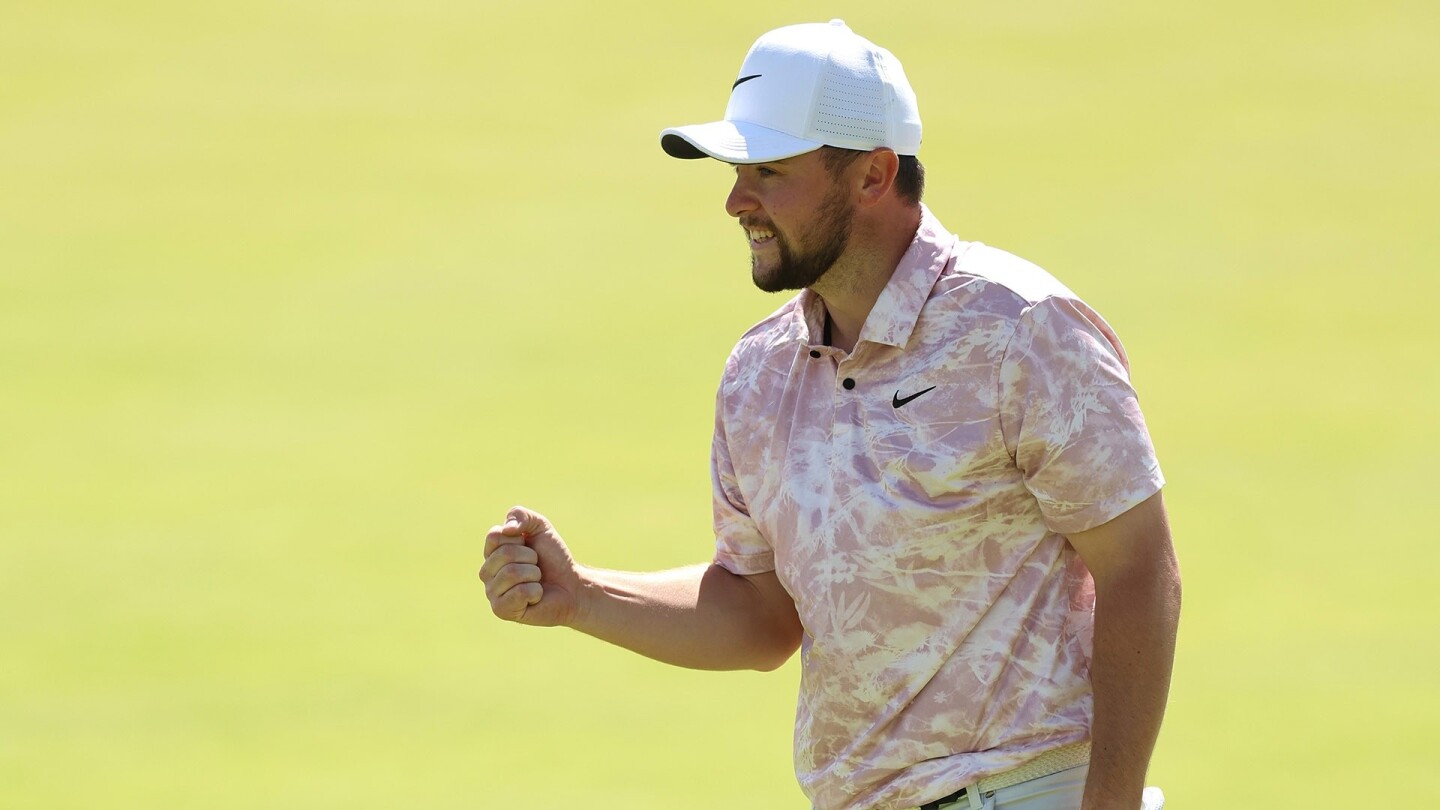
They hired a sports psychologist. Overhauled Alex’s putting routine. And committed fully to the Korn Ferry Tour schedule—playing nearly every event, often sleeping in rental cars or modest hotels to stretch limited funds.
The turning point came at the Hotel Fitness Championship in Indiana.
Alex entered the week ranked 32nd on the Korn Ferry points list—just inside the cutoff for automatic PGA Tour promotion. One poor finish, and he’d fall out.
He opened with a 66. Followed by a 68. But Saturday brought disaster—a quadruple bogey on the 12th hole derailed momentum, and doubts crept in.
“I looked at Ryan after that hole and said, ‘We’re not doing this again,’” Alex later admitted.
Ryan’s response? “No. We’re not. But we’re not quitting, either. We reload.”
They did. Alex shot a final-round 65, including birdies on 16 and 17, to finish T5. The result moved him to 11th on the final points list—firmly securing his PGA Tour card.
The Final Round: Anatomy of an Emotional Victory
Let’s dissect that Sunday at the Hotel Fitness Championship—not just the shots, but the moments between them.
- Hole 14: After the Saturday meltdown, Alex faced the same stretch. Par 4, dogleg left, water on the right. He hit a cut 3-wood off the tee, landed it 20 yards from the hole. “Same shot, different mindset,” Ryan told him.
- Hole 16: Downwind par 5. Conservative play would leave him short. Ryan suggested going for the green in two. “You’ve got it. Trust it.” Alex did—faded a 4-iron to 18 feet. Made the birdie.
- Hole 18: Standing on the 18th green, two-putt for the T5 that would all but secure his card. The crowd sensed it. So did Ryan. No words. Just a nod.
When the final putt dropped, Alex dropped to his knees. Ryan sprinted from behind the green, arms wide. They embraced, silent at first, then laughing, then nearly crying.
“It wasn’t just joy,” Ryan said later. “It was relief. For both of us.”
Why This Story Resonates Beyond Golf
The Fitzpatrick brothers’ story isn’t just about golf. It’s about what it means to support someone through years of uncertainty. About the invisible labor of being a sibling in the trenches.
In a sports world obsessed with individual achievement, this victory was deeply collaborative.
Consider the emotional toll on Ryan. As caddie, he has no guaranteed paycheck. No spotlight. His income depends entirely on Alex’s performance. His reputation rises and falls with every swing. Yet he’s turned down caddie offers from other players to stay with his brother.
“There’s no ‘me’ in this,” Ryan said. “If Alex fails, I fail. But if he wins? I win too—just differently.”
It’s a model of partnership rarely celebrated in elite sports—a relationship built not on transaction, but loyalty.
The Road Ahead: What the PGA Tour Means for Alex Fitzpatrick With PGA Tour status secured, Alex steps into a new arena. The competition is deeper. The travel, relentless. The expectations, higher.
But he’s not walking alone.
His game is built on precision, not power. A strategist on the course, he averages just 290 yards off the tee—but ranks in the top 15 in strokes gained: approach. His short game, once inconsistent, has become a weapon.
And his mental game? Forged in years of doubt and brotherly honesty.
Early 2024 tournaments will test his readiness. Can he compete with the big hitters? Can he handle the media attention, the sponsorship demands, the pressure of being “the guy who made it with his brother on the bag”?
But if last season proved anything, it’s that the Fitzpatrick brothers thrive under pressure.
Sibling Dynamics in Sports: A Rare but Powerful Edge

Athletes with family on the sidelines aren’t unheard of—but they’re rare at the highest levels.
Consider these examples:
- Sergio García and his father, Victor – Caddied for Sergio for decades.
- Rory Sabbatini and his brother, David – Caddied during Sabbatini’s prime.
- Brooke Henderson and her sister, Brittany – A successful PGA Tour caddie relationship.
- Tom Watson and his son, Michael – Caddied during some of Watson’s later successes.
- Tommy Fleetwood and his brother, Adam – Early in Tommy’s career, Adam carried the bag.
What do these pairs share? Unfiltered communication, deep trust, and emotional resilience. But also risks—family conflict can spill onto the course. A harsh word in frustration can echo longer than any missed putt.
The Fitzpatrick brothers’ success suggests that when managed with maturity, the sibling dynamic isn’t a liability—it’s a competitive advantage.
What the Golf World Should Learn from This Victory
In an era where sports psychology, data analytics, and biomechanics dominate coaching, the Fitzpatrick story is a reminder: sometimes, the most powerful tools aren’t measurable.
- Emotional continuity matters – Having the same caddie, the same voice, season after season, builds trust that no algorithm can replicate.
- Sibling accountability is unique – Brothers don’t sugarcoat. They challenge. They remember past failures. They hold you to higher standards.
- Shared sacrifice fuels persistence – Ryan gave up his own career path. Alex trained while his brother worked extra shifts to fund travel. That mutual investment creates a bond that pressure can’t break.
Other aspiring pros might consider: Who’s truly in your corner? Who will tell you the hard truth when you’re playing scared? Who will stay after you lose—again?
For Alex, the answer was always Ryan.
Closing: The Next Chapter Begins—Together
Alex Fitzpatrick’s PGA Tour card isn’t just a ticket to elite golf. It’s validation. It’s the proof that years of grinding, doubting, and pushing forward with his brother beside him weren’t in vain.
Now, the challenge shifts. Can they scale the next mountain? Can they adapt to the pace, the pressure, the spotlight?
One thing is certain: when Alex walks to the first tee at his debut PGA Tour event, Ryan will be there—quiet, focused, ready.
No speeches. No fanfare. Just two brothers, doing what they’ve always done.
And for anyone chasing a dream that feels just out of reach, their story offers a simple truth: sometimes, the greatest advantage isn’t talent, money, or connections.
It’s having someone who believes in you—even when you don’t.
FAQ
Why does Ryan Fitzpatrick caddie for his brother Alex? Ryan caddies for Alex because of their deep trust, shared history, and proven ability to communicate honestly under pressure.
Is Alex Fitzpatrick related to NFL quarterback Ryan Fitzpatrick? They are distant cousins, but not directly related. The connection is often overstated in media coverage.
How did Alex Fitzpatrick earn his PGA Tour card? He finished inside the top 25 on the Korn Ferry Tour points list, primarily through consistent top-25 finishes, including a T5 at the Hotel Fitness Championship.
What role does Ryan play beyond carrying the bag? Ryan provides emotional support, course management input, and candid feedback—functioning as both caddie and mental coach.
What makes the Fitzpatrick brothers’ dynamic unique in golf? Their relationship combines familial loyalty with professional accountability, creating a rare blend of honesty and unwavering support.
Did Alex attend college in the U.S.? Yes, he played collegiate golf at Wake Forest University, following in the footsteps of other PGA Tour pros like Curtis Strange and Bill Haas.
What’s next for Alex on the PGA Tour? He will compete in full-field events, with early focus on courses that reward precision over power—playing to his strengths.
FAQ
What should you look for in Fitzpatrick Brothers’ Emotional Triumph Secures Alex’s PGA Tour Spot? Focus on relevance, practical value, and how well the solution matches real user intent.
Is Fitzpatrick Brothers’ Emotional Triumph Secures Alex’s PGA Tour Spot suitable for beginners? That depends on the workflow, but a clear step-by-step approach usually makes it easier to start.
How do you compare options around Fitzpatrick Brothers’ Emotional Triumph Secures Alex’s PGA Tour Spot? Compare features, trust signals, limitations, pricing, and ease of implementation.
What mistakes should you avoid? Avoid generic choices, weak validation, and decisions based only on marketing claims.
What is the next best step? Shortlist the most relevant options, validate them quickly, and refine from real-world results.